An AC blowing warm air in the Coachella Valley creates an urgent comfort problem. Summer temperatures here exceed 120 degrees Fahrenheit on the most extreme days. Your home heats up fast when the cooling system fails to perform. Warm air from the vents signals a problem that needs attention before the heat puts your equipment at risk.
Why Is Your AC Running but Not Cooling the Home?
An AC that runs but blows warm air points to a system problem. The unit powers on and the blower pushes air through the ducts as expected. However, something in the cooling cycle prevents the system from removing heat. Several issues can interrupt that cycle at different points.
Airflow restrictions starve the evaporator coil of warm air to process. Low refrigerant reduces the system’s ability to absorb heat from the air. Thermostat malfunctions send incorrect signals to the equipment. Electrical failures shut down components that the cooling cycle depends on. Each cause results in warm air, but each requires a different repair.
How Coachella Valley Heat Puts Extra Stress on AC Systems
The Coachella Valley ranks among the hottest residential areas in the United States. Triple-digit temperatures persist from May through October in most years. That sustained operation pushes every component toward its performance limits.
Desert heat also raises the temperature of the air surrounding the outdoor condenser. The condenser must reject heat from the refrigerant into the outdoor air. When ambient temperatures reach 115 degrees, the system must work harder to release heat, putting pressure on the compressor.
Could a Dirty Air Filter Be Blocking Airflow?
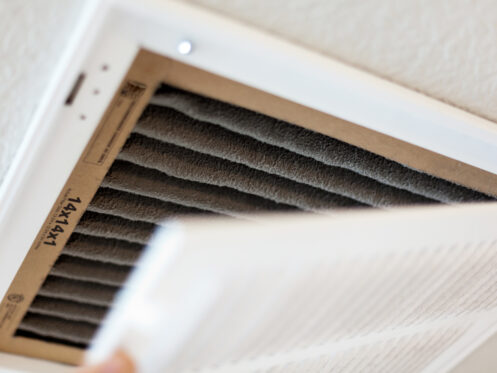
A clogged air filter is the most common and most fixable cause of warm air from the vents. The filter traps dust, sand, and debris before they reach the evaporator coil. Desert conditions in the Coachella Valley fill filters faster than moderate climates. A filter that looks clean after 30 days elsewhere may clog within 2 weeks here.
When the filter restricts airflow, less warm air reaches the evaporator coil. The coil temperature drops below normal because it absorbs less heat. In severe cases, the coil freezes and ice blocks airflow to the point of total shutdown. Check your filter first when warm air appears. A fresh filter may resolve the issue without a service call.
What Happens When Refrigerant Levels Are Low?
Refrigerant circulates through the system in a sealed loop. It absorbs heat inside and releases it outside during every cycle. The system never uses up refrigerant during normal operation. A low charge means a leak exists somewhere in the lines, coils, or connections.
Low refrigerant reduces the system’s heat absorption capacity. The air passing over the coil doesn’t cool to the expected temperature. You feel warm or lukewarm air from the vents even though the system runs. Ice may form on the refrigerant lines or the evaporator coil.
A hissing or bubbling sound near the indoor or outdoor unit can indicate a leak. These sounds come from refrigerant escaping through a crack or corroded joint. A technician must locate the leak, repair it, and recharge the system to the correct level. Adding refrigerant without fixing the leak wastes money and delays the real repair.
Can Thermostat Problems Cause Warm Air?
A thermostat problem can prevent the AC from engaging the cooling cycle at all. Check the setting first. A thermostat set to “fan only” blows air without cooling it. Someone in the household may have changed the setting without realizing it.
Sensor malfunctions cause a different kind of thermostat problem. The sensor reads the wrong temperature and tells the system that conditions are different from reality. The AC may shut off before the room reaches the set temperature. It may also fail to start because the sensor reports the room as cool enough.
Wiring problems between the thermostat and the air handler also cause warm air. A loose wire or corroded connection can interrupt the signal that starts the compressor. The blower runs because it receives its signal on a separate circuit. The result is unconditioned air flowing through the vents. A technician can test the wiring and replace any faulty connections.
Why Electrical Issues Can Affect AC Performance
Your AC relies on several electrical components that each serve a specific function. The capacitor stores energy to start the compressor and fan motors. A failed capacitor prevents the compressor from engaging, so the system blows air without cooling. Capacitors fail more often during extreme heat due to increased electrical demand.
Tripped breakers cut power to the outdoor unit while the indoor blower keeps running. The blower operates on a separate circuit from the condenser. You hear and feel air from the vents, but the air doesn’t cool. Check your electrical panel for a tripped breaker before calling for service.
Damaged wiring and compressor failures require professional diagnosis. These issues involve high-voltage components that create serious safety risks. A technician tests each electrical component under load to identify the failure point. Professional AC repair addresses electrical problems with the proper tools and safety protocols.
Could Dirty Outdoor Coils Be Reducing Cooling Efficiency?
The outdoor condenser coil releases heat that the refrigerant absorbed inside your home. Desert dust, sand, and debris coat these coils throughout the Coachella Valley’s long cooling season. A layer of buildup on the fins acts as insulation that traps heat against the coil. The system cannot reject heat fast enough, and the air inside your home stays warm.
Rinsing the condenser coils with a garden hose removes surface-level dust and debris. Spray from the inside out to push particles away from the fin surfaces. Schedule this rinse every four to six weeks during the cooling season. After a windstorm, inspect the unit and rinse it before the next cooling cycle.
Heavy buildup requires professional cleaning with specialized solutions and equipment. A technician removes the access panels and cleans each section of the coil. This service restores full heat rejection capacity and reduces compressor strain.
Why Professional AC Diagnostics Matter
Warm air from the vents can stem from one issue or several issues working together. A homeowner can check the filter, thermostat, and breaker panel without risk. Beyond those steps, accurate diagnosis requires professional tools and training. Refrigerant gauges, multimeters, and thermal sensors reveal problems that visual inspection cannot detect.
A technician tests refrigerant pressure, electrical component health, and airflow volume during a diagnostic visit. These measurements pinpoint the exact cause rather than guessing between possibilities. Accurate diagnosis eliminates unnecessary part replacements and gets your system back to full cooling output faster. It can also uncover secondary damage sustained from the primary failure.
Schedule Professional AC Service Before Desert Heat Causes Bigger Problems
Warm air from your AC in the Coachella Valley demands quick action. Every hour without proper cooling raises indoor temperatures to dangerous levels in this climate. A small problem today can become a compressor failure tomorrow under sustained triple-digit heat. We offer emergency AC service to address these issues.
Hermetic Heating & Air brings NATE and NCI-certified expertise to every AC service call across the Coachella Valley. We stand behind our work with fair pricing, a one-year warranty, and our Gold Maintenance Plan. We offer 24/7 emergency availability and financing on approved credit. Call Hermetic Heating & Air to schedule AC service in the Coachella Valley today.